The Fires
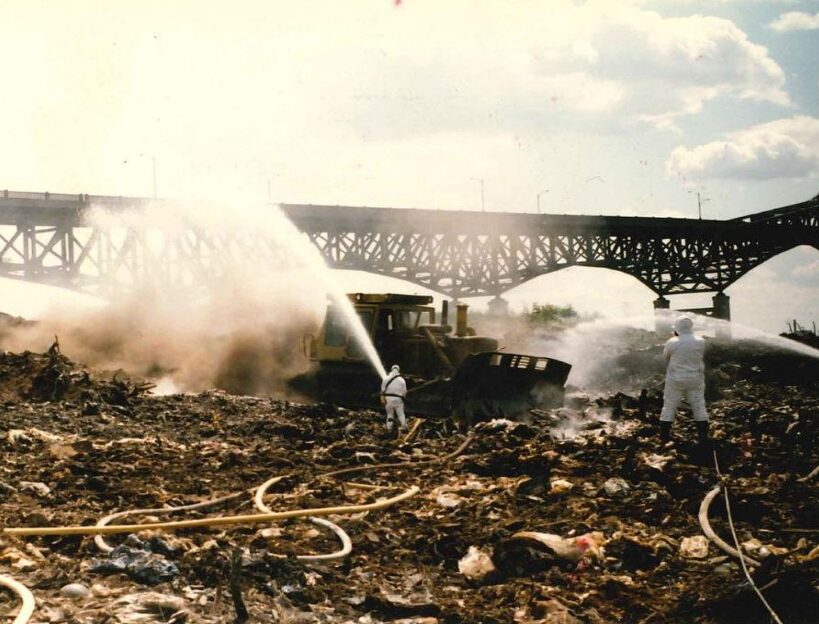
A later example of the devastation brought on by industrialization and corruption in Hudson County– and one much closer to home– was the PJP Landfill in Jersey City. Located on 87 acres of riverfront land, on the west side of Jersey City where Sip Avenue intersects with Routes 1&9, this landfill was one of many where huge amounts of contaminants and other toxic wastes were buried underground.
For years, the PJP Landfill had been the subject of numerous complaints by local residents, the city and the NJ Department of Transportation since 1973. The site was closed in 1977 by state order.
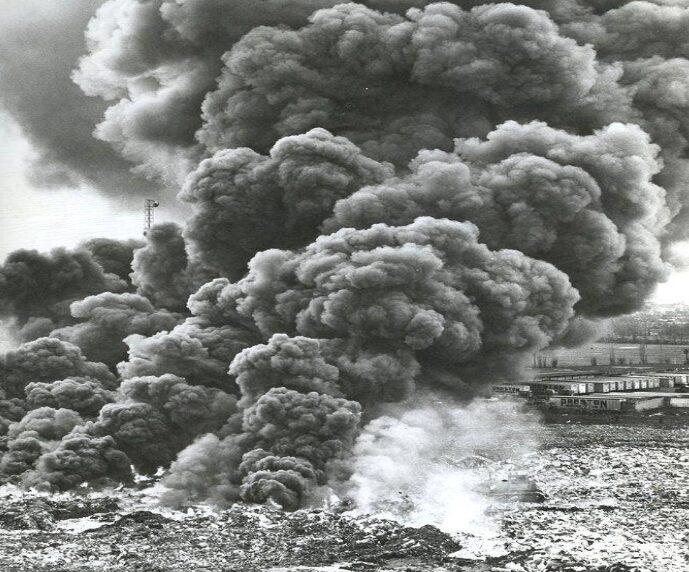
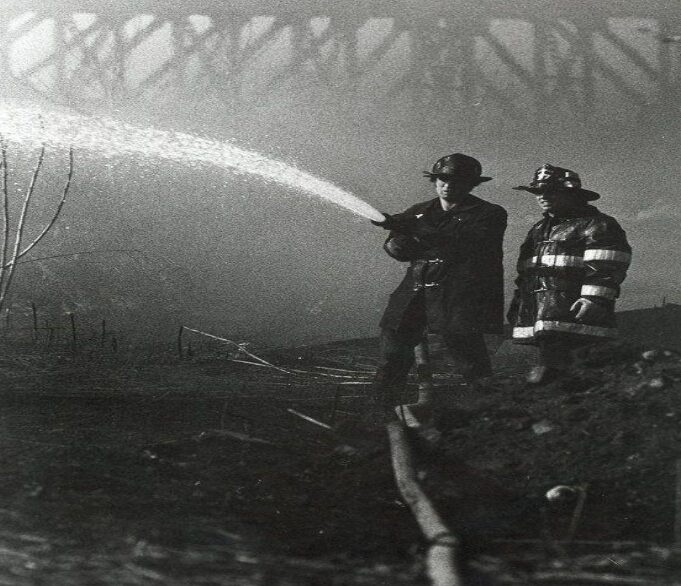
”I would say that we’ve been fighting fires there constantly for the last few years,” said Lieut. Robert McCarthy of the Jersey City Fire Department. Lieutenant McCarthy said it was common knowledge that there had been ”many instances of midnight dumping” at the landfill. He added, however, that no one had ever determined what was burning there. The principal owner of the landfill site, some 51 acres of it, was the Roman Catholic Archdiocese of Newark, which had been attempting to sell the parcel for years.
The archdiocese and Edwin Seigel, the other principal owner of the area, leased the tract to two men identified as Paul Capola and Philip Moscato. A third man, local political operative John J. Kenny– no relation to a former mayor with a similar name– was involved in the enterprise. The PJP Landfill– aka Brother Moscato’s Dump– gets its name from the first letters of these three men’s names.
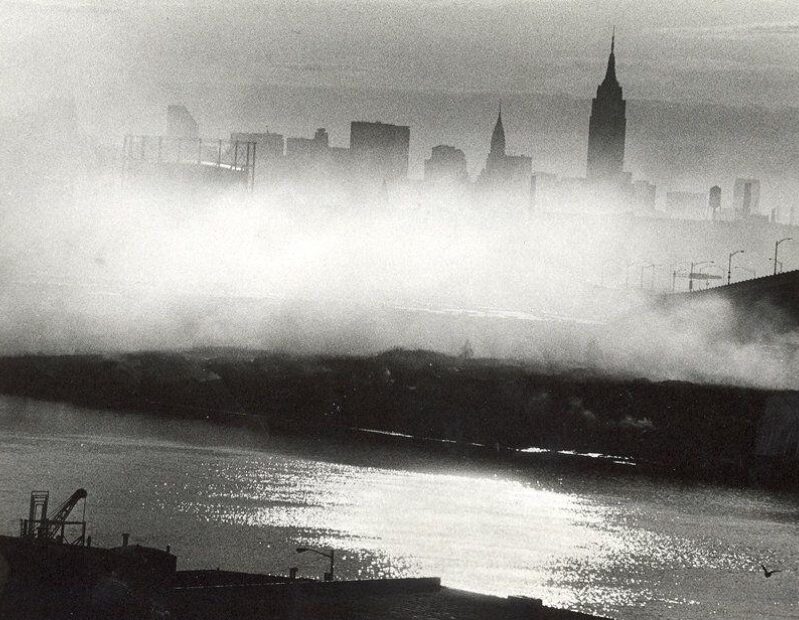
Kenny and Moscato were well known to law enforcement. Phil “Brother” Moscato Sr was thought to be a soldier in New York’s Genovese crime family, while Kenny (a former Hudson County Freeholder) was convicted of bribery, extortion and misconduct in office in 1973. Kenny was also part of a scheme to convert more than 100 acres of Hudson County parkland into a landfill operation. A total of 11 men were indicted in that conspiracy, which took place between 1967 and 1970.
It was no secret that organized crime was involved in the carting industry– hauling garbage to landfills– and it was assumed that the PJP landfill was one of those places. When former Teamster President Jimmy Hoffa disappeared in 1975, there was much speculation that his body was dumped somewhere in New Jersey. Recent reports identify a spot near the PJP Landfill, although– despite FBI inquiries– no evidence has surfaced.
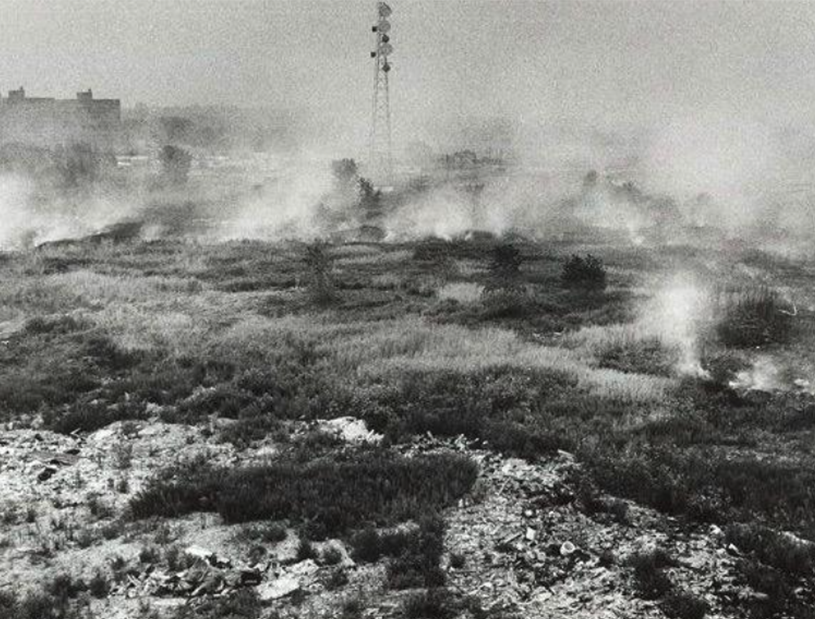
More troubling, the PJP landfill was the site of an underground fire that lasted for at least 14 years. The JC Fire Department would put out the fire but it would flair up again later. Residents of the Marion neighborhood, adjacent to the landfill, as well as people in other nearby areas smelled the smoke on a regular basis.