Industrialization Brings Pollution
Except for the harvesting of salt hay– an industry that existed from the 1600s to the early 20th century– the Meadowlands were mostly considered wasteland. In 1907, Colonel Joseph O. Wright, a federal engineer, declared, “The marsh in its present condition is not only worthless, but is a detriment to public health and a nuisance to the residents of the adjacent upland.” It was “a prolific place for mosquitoes,” containing sewer filth “both obnoxious and unwholesome.”
Over the years, as the region’s population grew, the Hackensack River– water and shore– and the Meadowlands began to play a different economic role.
- Starting in 1901, the water company began constructing dams and reservoirs throughout the Hackensack River watershed.
- Extensive dredging of the Passaic and Hackensack rivers from the late 1800s onward further altered the waters of the Hackensack Meadowlands.
- A series of land reclamation projects began, most notably bridges and highways built across the Meadowlands.
- Factories and warehouses sprung up along the river shore.
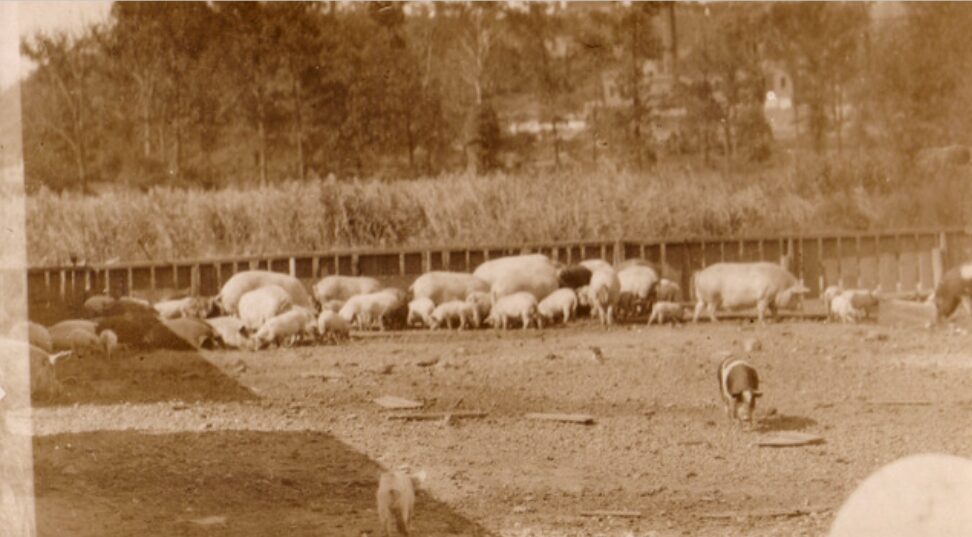
- Starting in the early years of the 20th century, pig farms proliferated in the region, giving it one of its best known qualities: Its smell.
- On top of that, the Meadowlands served as a refuse and garbage dump– for both local cities and towns as well as New York City.
At the start of the 20th century, the expanding urban population, combined with increasing prosperity, resulted in a rapidly growing amount of garbage coming out of the cities of north Jersey. Garbage collected by private scavengers or municipal agencies was mixed with clean fill (chemically inert solid materials, such as rocks, gravel, cinders, bricks, and concrete) and used for the new land-making projects. In 1909 a Newark newspaper reported (admiringly) that “New York rubbish is being turned into Jersey soil by scow after scow from Manhattan.”
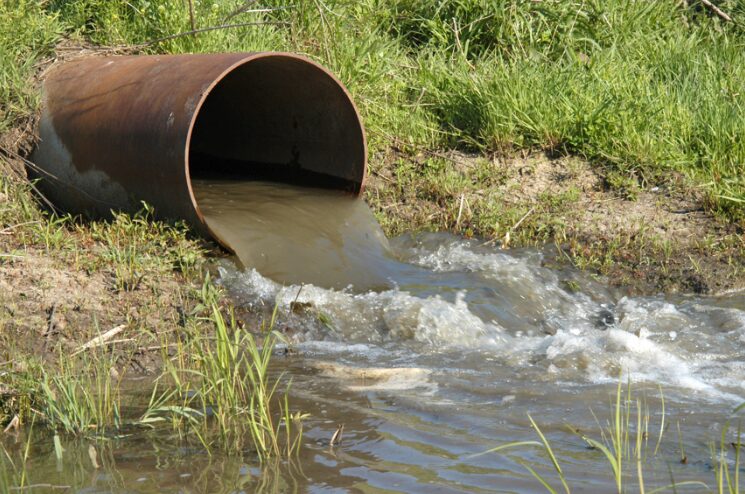
Often the garbage was simply dumped into the Meadowlands, which was already considered a wasteland. Factories along the Hackensack River also contributed to the pollution by dumping untreated industrial waste. Municipalities often made matters worse by sending raw sewage into the river. There is a story that the town of North Arlington built a canal in the Meadowlands– sometimes called the “poop canal”– to carry its waste out to sea.
Meadowlands were particularly attractive for both legal and illegal dumping. In 1957, almost six acres were given over to landfilling every month in East Rutherford alone. A decade later, the Meadowlands held eleven sanitary landfills that received 29,469 tons of residential, commercial, and industrial waste each week from New Jersey municipalities and parts of New York state. These eleven landfills covered 1170 acres and former landfills covered an additional 1500.