Transportation: The Pulaski Skyway
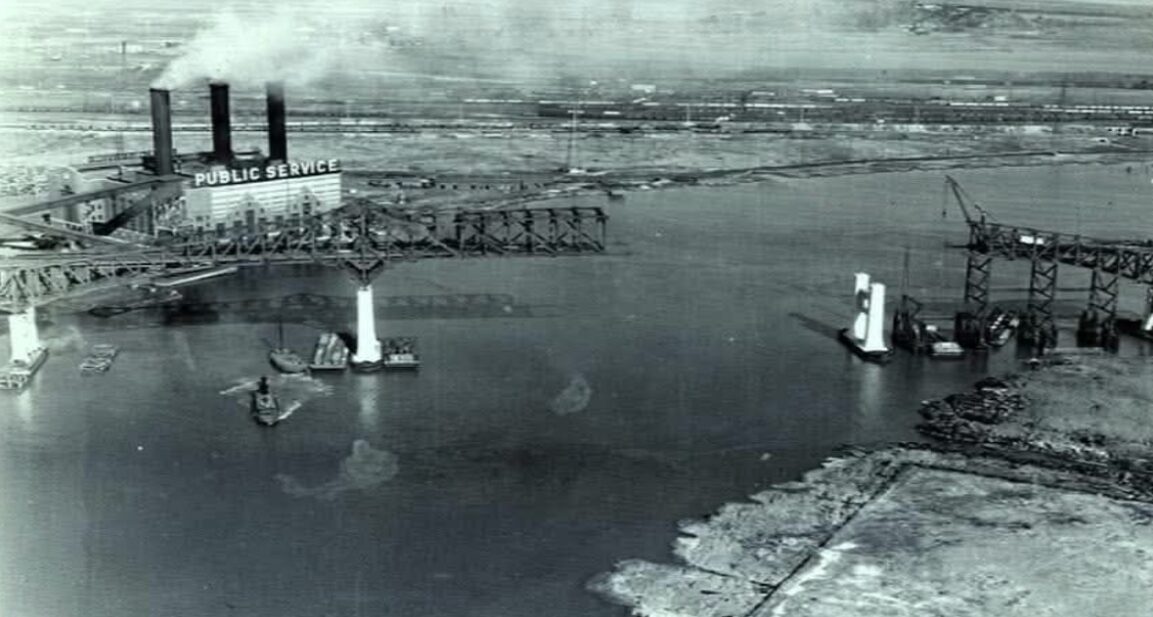
For most of the 20th century, the Hackensack Meadowlands were seen as little purpose other than as dumping grounds. And an obstacle to reach the Hudson River and New York City. That began to change with the construction of the Pulaski Skyway and, later, the New Jersey Turnpike.
Given its proximity to New York City, the region needed improved transportation links and it soon became home to an extensive network of roads, rail lines, bridges and tunnels– many of them built during the years between WWI & WWII. For decades, Jersey City had been a railroad town, a transition point for hauling and shipping. With the advent of new roads, bridges and tunnels, trucking took on a larger role in the transportation infrastructure of the 20th century.
NJ to NY
The creation of an underground rail system from NJ to NY– “the Hudson Tubes”– in 1908 was just the beginning. In 1927, the Holland Tunnel opened and, a decade later, the Lincoln Tunnel. The Pulaski Skyway opened in 1932. And the NJ Turnpike eastern spur debuted in 1952, the western spur in 1970.
These massive construction/transportation projects were complicated by a number of factors, notably the power of organized labor, urban corruption and organized crime. The story of the building of the Pulaski Skyway exemplifies the intersection of these three things.
While the rise of trade unions in the early years of the 20th century dramatically improved the lives of millions of working people, some construction unions– especially in north Jersey– were infiltrated by members of organized crime. Complicating that already volatile mix was the reign of Jersey City Mayor Frank Hague. Hague was a bundle of contradictions: A popular politician who ran a working class town but hated trade unions, a generous public official who was often a dictator with his own fiefdom.
When construction of the Pulaski Skyway began in the late 1920s, labor activists, notably the Ironworkers, fought to make it a union job. But the builders did not want unions on the job– and they found an unlikely ally in Mayor Hague. By bringing in scabs to build this huge bridge, the business leaders triggered a labor war that led to numerous deaths and much violence. Hague added fuel to the fire by directing the Jersey City police along with hired criminal thugs to attack union activists.
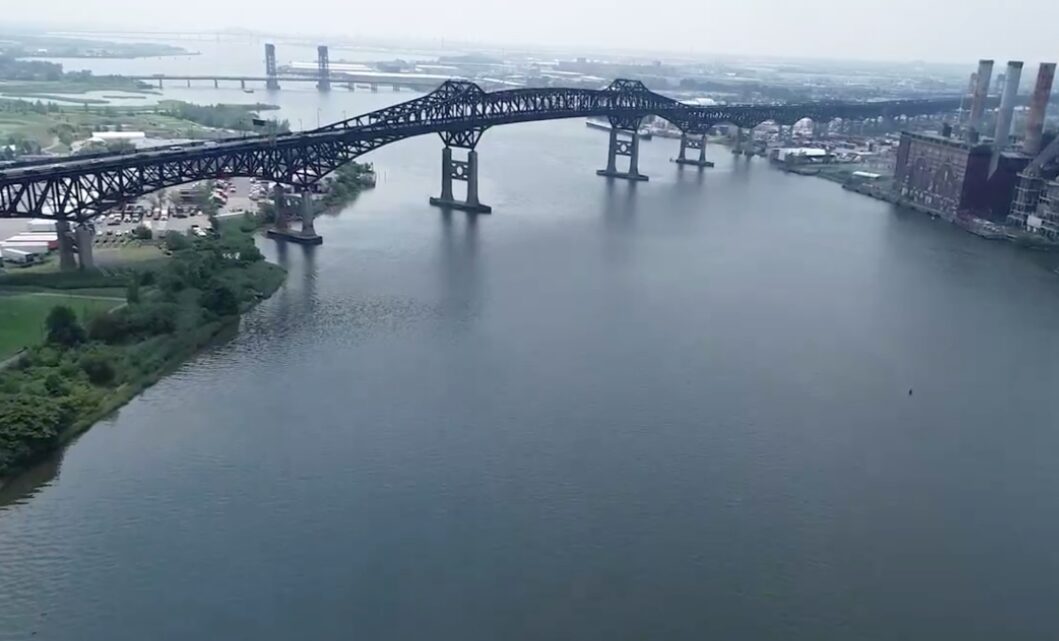
By the time that traffic began to use the Pulaski Skyway– a huge undertaking, which spanned two rivers (the Passaic & the Hackensack)– it was already obsolete. Yet it was also an engineering wonder, a hulking beauty that traversed the Meadowlands and forever altered the landscape of Hudson County.