Public Protest Leads to Cleanup
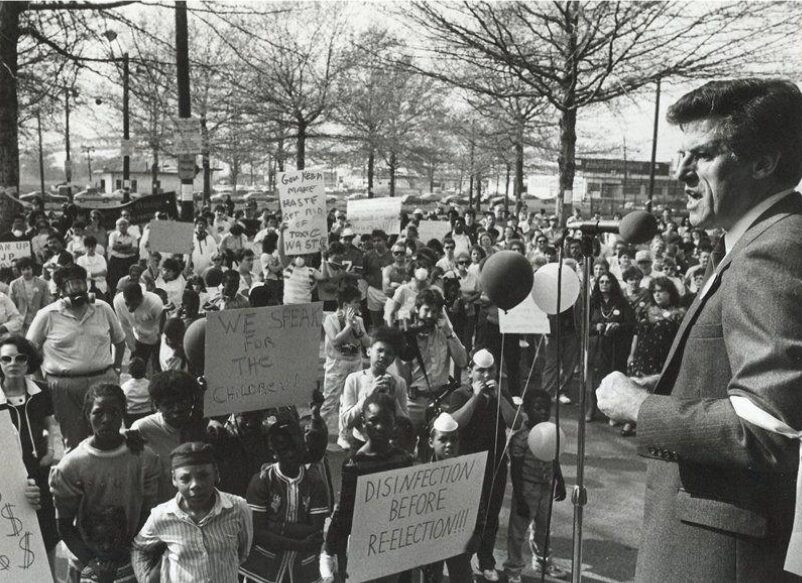
Citizens complained, demonstrations were held, public officials (finally) spoke out about this nightmare situation. In 1984, a large crowd came out for a rally where Congressman (later Governor) Jim Florio spoke to a spirited crowd. Note the man with a gas mask on the left. After years of protest, the time finally came to solve this problem.
In 1983, the U.S. Environmental Protection Agency (EPA) declared the PJP Landfill a Superfund site and the cleanup began. More than 30,000 barrels of toxic waste were pulled out of the ground and the site was cleaned and capped.
The EPA move did not happen in a vacuum. In the 1970s, a grassroots environmental movement took hold in the United States– and around the world. Concern over the future of the planet led to widespread activism and new laws were passed to address pollution.
At the federal level, some keys laws were:
Environmental Protection Agency (EPA), 1970
- Clean Water Act, 1970
- Occupational Safety and Health Act (OSHA), 1970
- Clean Air Act, 1972
- Endangered Species Act, 1973
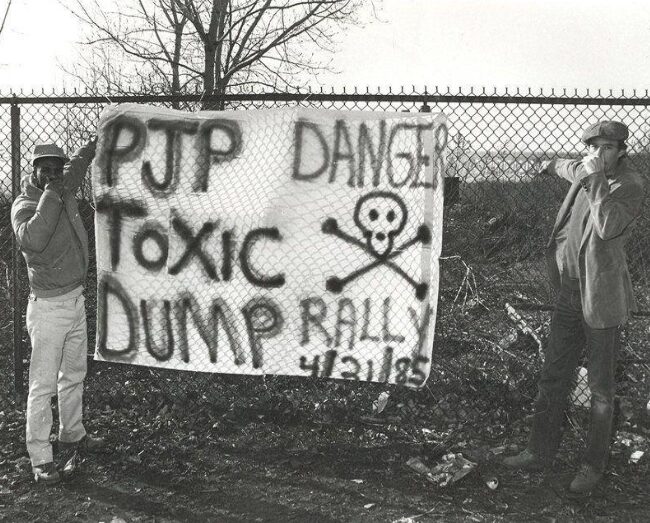
Citizens complained, demonstrations were held, public officials (finally) spoke out about this nightmare situation. In 1984, a large crowd came out for a rally where Congressman (later Governor) Jim Florio spoke to a spirited crowd. Note the man with a gas mask on the left. After years of protest, the time finally came to solve this problem.
In 1983, the U.S. Environmental Protection Agency (EPA) declared the PJP Landfill a Superfund site and the cleanup began. More than 30,000 barrels of toxic waste were pulled out of the ground and the site was cleaned and capped.
The EPA move did not happen in a vacuum. In the 1970s, a grassroots environmental movement took hold in the United States– and around the world. Concern over the future of the planet led to widespread activism and new laws were passed to address pollution.